Introduction: A Hyped Launch and a Cold Reception
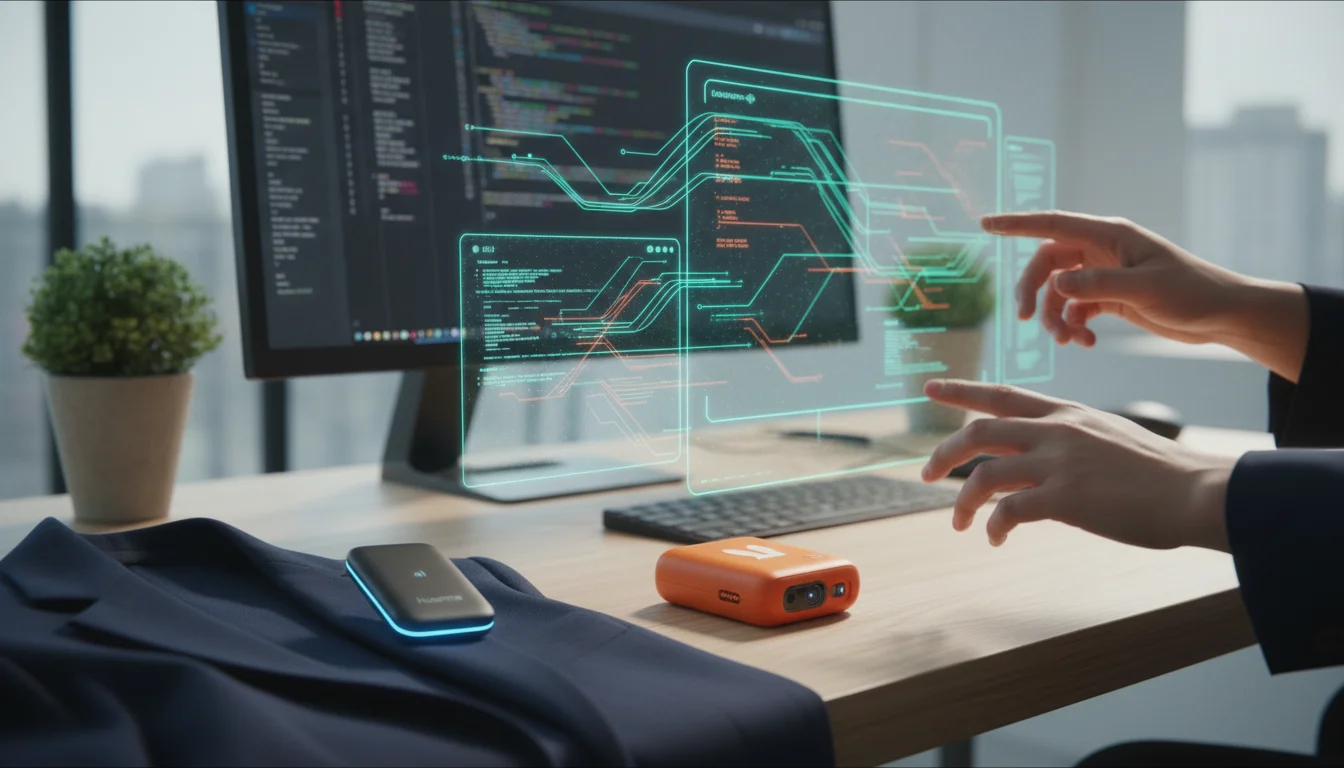
The start of 2024 in the tech world was marked by two major launches that promised nothing less than the dawn of the "post-smartphone" era. The Humane AI Pin and Rabbit R1 were positioned as the first of their kind: AI gadgets designed to free us from the tyranny of screens and endless scrolling. The idea was thrilling: compact, voice-and-gesture-controlled devices that, with the help of artificial intelligence, would become our personal assistants, anticipating our needs and completing tasks on the fly. Marketing campaigns painted a picture of a future where technology is invisible and intuitive.
However, reality turned out to be a far cry from the promotional videos. The first reviews from leading tech bloggers, including the now-famous takedown by Marques Brownlee (MKBHD), were brutal. The devices overheated, ran slowly, struggled to recognize commands, and their key AI features often failed or produced incorrect results. Instead of a revolution, users got raw, expensive, and impractical gadgets. The hype gave way to disappointment, and the internet quickly delivered its verdict: "flop of the year."
But is it really that simple? Are we witnessing the collapse of an ambitious idea, or are these just the inevitable growing pains of a "version 1.0" in a new technological paradigm? In this article, we at Cyrox.dev will break down what went wrong with the AI Pin and Rabbit R1, what valuable lessons product teams can learn from it, and what the future holds for AI gadgets.
What Went Wrong? An Analysis of the Key Issues
The failure of these first AI assistants isn't the story of a single mistake, but a complex set of problems spanning technology, design, and the business model itself. Understanding these missteps is critical for anyone involved in developing innovative IT products.
Technological Immaturity and Performance
The most glaring issue was the basic functionality of the devices. AI Pin users complained about severe overheating, which made wearing the gadget on clothing uncomfortable, and catastrophically short battery life. Both devices suffered from slow response times—the delay between a query and an answer could be as long as 5-10 seconds, completely killing the magic of an "instant assistant." In comparison, pulling out a smartphone and doing the same task manually was often faster.
The AI functionality also left much to be desired. The promised ability to understand complex context and perform multi-step tasks often resulted in speech recognition errors, incorrect information (model hallucinations), and frequent refusals to execute requests. The key takeaway: You can't launch a product whose core technology isn't stable. Even the most revolutionary concept will be rejected if its daily use brings more frustration than benefit.
UI/UX Problems: Intuition vs. Innovation
The creators of these gadgets attempted to completely rethink user interaction with technology. The AI Pin ditched a screen in favor of a laser projector on the user's palm, while the Rabbit R1 offered a minimalist interface with a single button and a small screen. The goal was noble—to create "ambient computing," where technology fades into the background. But in practice, this created new problems.
The palm projection was dim in daylight and awkward to use. Voice control, which was meant to be the primary interaction method, showed its limitations: it's not suitable for use in public places, works poorly in noisy environments, and is inefficient for tasks requiring visual confirmation. The developers ignored decades of graphical user interface evolution that made smartphones so convenient. It turned out that a radical departure from familiar interaction patterns demands too much adaptation from the user without offering clear advantages in return.
Unclear Value Proposition
This is perhaps the deepest problem. Neither Humane nor Rabbit could clearly answer the consumer's main question: "Why do I need this if I have a smartphone?" What unique problem does this gadget solve, and does it solve it 10 times better than existing alternatives?
Lack of a "killer app": The devices didn't offer a single unique feature that would make it worth tolerating all their shortcomings. Most tasks—from ordering a taxi to searching for information—were done faster and more reliably on a smartphone.
High price and subscription: The $699 price tag for the AI Pin and $199 for the Rabbit R1, plus a mandatory monthly subscription, seemed unjustified given their limited functionality.
The "digital detox" argument: The idea of breaking free from smartphone addiction sounded appealing, but in reality, the gadgets still required a network connection and couldn't fully replace a phone, creating yet another device to charge and carry around.
In the end, instead of solving a real user pain point, the companies offered an expensive toy with a hazy future, which predetermined its cold reception in the market.
Lessons for Developers and Product Teams
The story of the AI Pin and Rabbit R1 is an invaluable case study for any IT company. It vividly demonstrates classic mistakes that can and should be avoided when creating new products, especially in a complex field like AI.
Lesson 1: MVP Doesn't Mean "Non-Working Product"
The concept of a Minimum Viable Product (MVP) is often misinterpreted. An MVP isn't a raw prototype that constantly breaks. It's the earliest version of a product that perfectly solves at least one, but most important, user problem. The AI Pin and Rabbit R1 couldn't reliably perform even their basic functions, so they can't be called successful MVPs. They were more like "minimally non-viable."
Practical advice: Before expanding functionality, focus on the stability and performance of your product's core. Identify one key task that your product must perform flawlessly. Only after you've achieved that should you start adding new features. At Cyrox.dev, we always begin a project with in-depth analysis to identify this key value and build a reliable foundation around it.
Lesson 2: Honest Marketing and Expectation Management
The huge gap between advertising promises and the real user experience was a major reason for the audience's disappointment. Marketing created an image of a perfect AI assistant from the future, while users received a device with alpha-version functionality. This undermines trust not only in the specific brand but in the product category as a whole.
Practical advice: Be transparent with your audience. If you're releasing an early version of a product, position it as a beta or a dev kit for enthusiasts. Use early access programs and closed beta testing to gather honest feedback, fix bugs, and refine the product before its public launch. Manage expectations: it's better to under-promise and over-deliver than the other way around.
Lesson 3: The Ecosystem is Everything
The power of the smartphone lies not in the device itself, but in the giant ecosystem of apps and services surrounding it. Any new gadget aiming to take its place is competing not with a piece of plastic and glass, but with the App Store, Google Play, and millions of developers. The AI Pin and Rabbit R1 were isolated "islands" with very limited integration capabilities.
Practical advice: Design your product as part of a larger ecosystem from the very beginning.
Open APIs: Allow other developers to integrate with your device and extend its functionality.
Strategic Partnerships: Collaborate with key online services (food delivery, ride-sharing, music streaming) to provide a seamless user experience.
A Hybrid Approach: Don't try to "kill" the smartphone right away. Think about how your gadget can be a useful companion to it, enhancing rather than replacing its capabilities.
The Future of AI Gadgets: What's Next?
Despite the rocky start for these early contenders, it's premature to bury the idea of personal AI devices. Failures are the fuel for innovation. The experience of the AI Pin and Rabbit R1 has highlighted the problems and pointed the way for future development.
Iteration and Evolution
Remember the first iPhone? It had no App Store, no 3G, and not even a copy-paste function. The first Android smartphones were slow and clunky. Every revolutionary technology goes through an "ugly duckling" phase. Today's AI gadgets are just the first generation. Future versions will undoubtedly feature more powerful and energy-efficient processors, improved AI models (including those running locally on the device), better batteries, and polished software. The data collected from these "failed" devices is invaluable for engineers and researchers.
New Form Factors and Hybrid Solutions
Perhaps the future isn't in standalone "AI pins," but in integrating smart assistants into the things we already use. The key challenge is to make technology truly invisible and convenient, not to force users to adapt to a new, strange way of interacting. We are already seeing the first steps in this direction:
Smart Glasses: The Ray-Ban Meta already lets you take photos, listen to music, and interact with an AI without pulling out your phone.
Headphones: Devices like AirPods Pro are already integrated with voice assistants and can gain new AI features through software updates.
Smartwatches and Rings: Compact wearables are the perfect platform for quick AI interactions, notifications, and data collection.
The Role of Cyrox.dev in Creating Next-Gen Products
The lessons learned from the story of the AI Pin and Rabbit R1 directly reflect the product development philosophy at Cyrox.dev. We believe that a successful innovative product is born at the intersection of a bold vision and pragmatic execution. Our comprehensive approach, which combines business analysis, UI/UX design, reliable development, and cutting-edge AI engineering, allows our clients to avoid similar pitfalls. We help not just to create a product, but to build a strategy, test hypotheses at early stages, create a stable and valuable MVP, and systematically evolve it based on real data and user feedback.
Conclusion: Don't Bury the Idea, Learn from the Mistakes
The Humane AI Pin and Rabbit R1 will go down in tech history not as successful products, but as bold and instructive experiments. They clearly demonstrated the vast gap between a futuristic concept and its real-world implementation. Their failure is not the end of the AI gadget era, but its true baptism by fire.
These devices have forced the entire industry to think about fundamental questions: about real user needs, the importance of stable technology, managing expectations, and the power of ecosystems. The future belongs not to those who shout the loudest about a revolution, but to those who can methodically and thoughtfully solve complex engineering and product challenges to create a device that truly makes people's lives easier. And our team at Cyrox.dev is ready to help create just that—thoughtful and successful next-generation products.